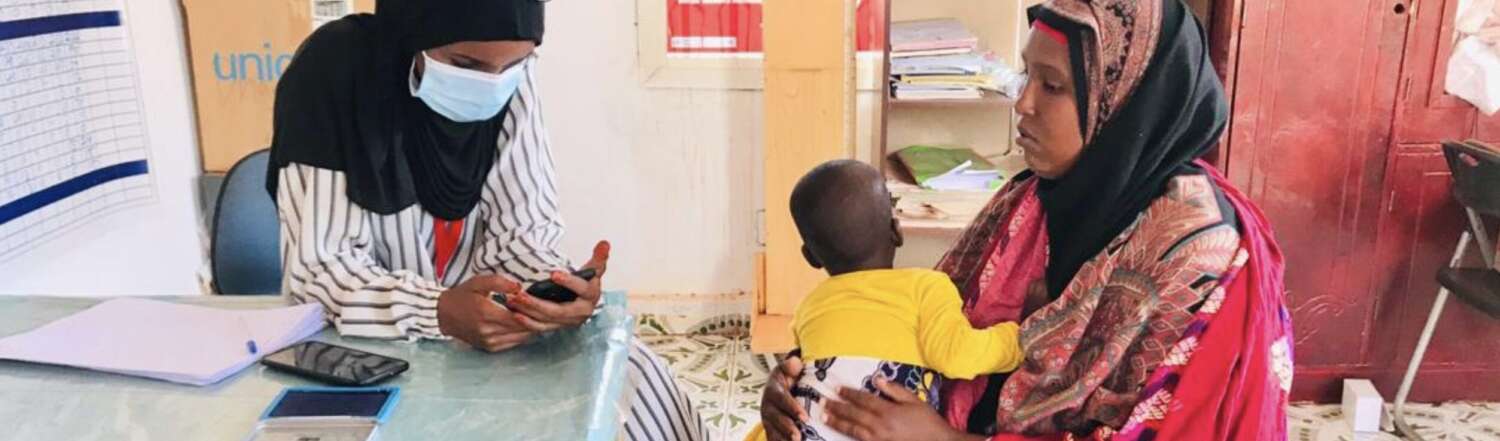
Image: Data collection for person-centred communication research study to prevent FGM (c) Data and Research Solutions (DARS), Hargeisa/Somaliland, Somalia. Source: who.int
Female genital mutilation (FGM) can be a difficult life experience.
It does not mean that a person is incapable of pleasure, intimacy, or sexual agency.
Many people affected by FGM experience desire, arousal, connection, and sexual satisfaction. Some report few sexual difficulties. Others need time, support, or adaptation to find what works for their body.
What tends to cause the most difficulty is not the body itself, but silence, stigma, unhelpful medical encounters, and stories that reduce someone to what happened to them.
In practice, FGM rarely shows up as “FGM.” It shows up as pain with penetration, difficulty with gynecological exams, fear of being touched, recurrent tearing, a partner who is worried about causing harm, or a client who has stopped initiating sex because avoidance feels safer.
Many sex coaches feel unsure how to respond. They worry about saying the wrong thing, focusing too much on the body, or missing something important.
This post is designed to support sex coaches in navigating FGM-related concerns in sessions, with attention to scope, language, and client-centred care.
(For global definitions of FGM, the WHO’s overview is clear and widely used.)
Naming the Pattern
A useful thing to notice early is that concerns related to FGM are often layered.
There may be physical factors (sometimes ongoing), psychological and relational factors (often ongoing), and social or legal factors (frequently present, even when not spoken about directly). These layers interact, and they don’t always show up in a predictable order.
Clients’ experiences also vary widely. What someone has lived through may not match the most familiar Western narrative of FGM as a single, uniform event with a single meaning. For some, it is tightly bound to family, religion, or community. For others, it is something they rarely think about until pain, intimacy, or medical care brings it into focus.
Language can be part of this complexity. Some clients use the term “FGM,” some say “cutting,” and some avoid labels altogether. These choices often reflect personal, cultural, or political meaning rather than comfort or distress alone. You don’t need to resolve debates about terminology or framing in session. It is enough to notice what language the client uses and follow their lead.
Culture, Pleasure, and Staying Within Scope

Image: UNICEF/UNI532191/Ayene
In the Sidama region of Ethiopia, young girls are participating in mobile-based training, aimed to empower girls aged 10-19 with life skills to protect them from harmful practices such as Female Genital Mutilation (FGM) and child marriage (CM). Source: who.int
FGM does not happen outside of culture. Ideas about sex, pleasure, modesty, gender roles, and what sexuality is “for” are shaped by social and religious contexts long before a client enters a coaching space.
In some contexts, pleasure is not named or prioritized. In others, it is understood as relational, private, or secondary to other values. These differences can influence how clients talk about desire, pain, satisfaction, or change, and whether they feel entitled to want something different.
As a coach, you do not need personal experience of a client’s cultural or religious background to be of service here. What matters more is being clear, respectful, and open.
It can be enough to say: “I may not fully understand your cultural context. If it’s relevant, I’m open to learning how it shapes your experience.”
Some clients find it supportive to share their own context in their own words. Others prefer not to. Both are valid. The role of the coach is not to ask the client to educate you, but to make room for context when it matters, without assumptions.
When appropriate, some practitioners offer to engage with resources the client already trusts, rather than researching independently and returning with interpretations that may miss nuance. Letting the client guide what is relevant can be both respectful and grounding.
Common Meanings People Attach
When clients feel stuck, it’s often because of what the experience has come to mean to them, about their body, their value, their desirability, or what they believe they should be able to do.
These meanings don’t always get said out loud. But they often sound like:
- “My body is ruined.”
- “Pleasure isn’t for me.”
- “No one will want me if they know.”
You don’t have to talk clients out of these beliefs. They tend to loosen when there’s room for context, and the client isn’t being pushed toward a solution.
What’s Often Going On Instead
1) Physical factors
FGM can be associated with ongoing physical issues, including pain, scarring, infections, urinary problems, menstrual difficulties, and complications related to childbirth.
Some clients will also have medical conditions that are outside a sex coach’s scope, for example, gynecological conditions or pelvic floor issues that need assessment by a clinician.
Recent research from Amsterdam University Medical Center has produced the first detailed 3D map of the full nerve network within the clitoris, tracing five branching pathways using high-energy X-rays. For FGM survivors who have undergone reconstruction, this matters: roughly 22% experience a decline in orgasmic function after the procedure. A more precise anatomical understanding of how far those nerves extend has the potential to improve surgical outcomes for that group specifically. It’s worth noting that aspects of clitoral anatomy have been documented by researchers and clinicians for years. What’s new is the level of detail and the formal recognition in surgical contexts.
2) The nervous system
Even when the body is capable of sexual response, the nervous system may associate arousal with danger… pain, exposure, loss of control, upsetting memories, or fear of disappointing a partner.
In these cases, the issue is often not desire. Sexual response depends heavily on context. So when the body doesn’t feel safe, shutting things down can be a sensible response.
3) Relationship dynamics
Partners may be careful in ways that feel supportive, or careful in ways that feel like avoidance. Some clients minimize their needs. Some avoid talking about sex altogether because they don’t want to be seen as demanding. Others feel pressure to prove they’re “still normal.”
Often, the work has less to do with sexual technique and more to do with helping people speak plainly, without being pitied, rushed, or interrogated.
4) Stigma, fear, and mistrust of systems
Many clients have had experiences of being stared at, handled roughly, dismissed, or turned into a teaching example. Some worry about legal consequences, family reactions, or community fallout. Others fear that disclosure will trigger responses they didn’t ask for.

WHO / Genna Print
A health worker meets with a woman during an outreach project in Tana River County, Kenya, focusing on delivering integrated, high-impact Sexual and Reproductive Health and Maternal and Child Health services. Source: who.int
Why This Matters in Practice
What tends to matter most isn’t having all the right information. It’s not adding more pressure to a situation that already carries a lot.
Even when medical care is needed and outside your scope, you can still offer something important: a place where the client can speak without being rushed, corrected, minimised, or handled with exaggerated concern.
If You Feel Out of Your Depth
There are times when a client’s physical condition clearly requires medical care. Referral is essential, but that does not mean the coaching work stops.
Sex Coach U graduate, Aiisha Ramadan, worked with a woman in her early 60s living in the Middle East who was experiencing a womb prolapse. She lived with daily discomfort, sometimes even bleeding while walking, yet for years had no safe place to talk about it or seek support. In her context, this kind of pain was rarely spoken about and often treated as something to endure quietly.
Medical assessment was necessary. Finding appropriate care, including a pelvic floor specialist, took time and persistence. Aiisha stayed alongside the client as a steady point of support. She helped her organize referrals, prepare questions for practitioners, and follow through on care that had previously felt overwhelming or inaccessible.
As the work continued, patterns also became more clear. Physical symptoms tended to worsen after specific relational stressors, particularly conflict within her immediate family. Noticing this helped the client make practical changes that reduced both physical strain and emotional load.
In situations like this, the role of a sex coach may include:
- being a consistent space where the client can speak openly
- supporting coordination of care and self-advocacy
- noticing patterns that may be relevant to wellbeing
- offering accountability around treatment plans
- and, where appropriate, helping the client explore pleasure, intimacy, and connection in ways that are not solely focused on the genitals while the body is under strain
Aiisha shared: “Healing in these cases is not only medical; it is deeply emotional and relational. When a woman’s body is finally listened to rather than ignored, change becomes possible. Awareness, trauma-informed care, and compassionate support are essential in restoring dignity, safety, and choice.”
A Practical Way to Work
As you can see, there isn’t a formula for this work. But a few simple principles can help.
Start with language, then follow the client’s lead
You can ask: “What language do you use for what happened?”
Then use the terms they choose.
Don’t make the genitals the whole story
If a client discloses FGM and the session immediately shifts into anatomy, it can reinforce the feeling that their body is being examined rather than understood.
Often it helps more to say: “Thank you for telling me. What would feel most useful to focus on today?”
When pain is present
Pain deserves to be taken seriously. For coaches without medical training, that usually means slowing the work down and supporting referral rather than analysing or reframing.
Know who you refer to
Depending on context, referrals may include gynecology, pelvic floor physiotherapy, sexual medicine, trauma therapy, specialist FGM services, or safeguarding support.
When referrals are handled calmly and clearly, clients are less likely to feel passed along or dismissed.
When clients ask about devices or “fixes”
Some clients ask about tools that might support arousal or sensation. There is limited but emerging evidence for certain interventions in specific contexts, including one randomized trial involving a clitoral therapy device used alongside psychosexual education.
If a client raises this, it can be named as one option to explore with an appropriately qualified clinician.
Where This Leaves Us
If you work long enough in this field, you will hear stories that don’t resolve neatly.
Work related to FGM often calls for steadiness: staying present without dramatizing, holding complexity without withdrawing, and being clear about what you can and can’t offer.
Being able to talk about one’s body without being corrected, rescued, or reduced matters. And often, that’s where things begin to shift.
FAQs
What term should I use: “FGM” or “FGC”?
Use the client’s language when possible. “FGM” is common in public health and legal contexts. “FGC” (cutting) is sometimes preferred for neutrality. Avoid using terminology as a moral tool in the session.
Is Sexual Difficulty Inevitable After Fgm?
No. Experiences vary widely depending on many factors, including the type of cutting, age, care received, relationships, and nervous system safety. Broad assumptions tend to increase shame.
Do I have reporting obligations?
This depends on where you practice and the client’s age and risk context. Check local law and professional guidance, and be clear with clients about confidentiality limits.